
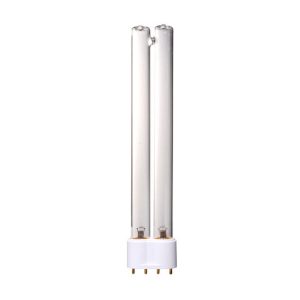
Getting Your UV Curing Right
When you’re shopping for industrial UV lamps, forget about the light you can actually see. That’s not what does the heavy lifting. What really matters is the spectral output—the invisible stuff that actually makes your adhesives, inks, and coatings harden. We build our lamps to hit those exact wavelengths so your materials cross-link and set exactly how they should. Power and Timing Here’s the thing: your curing speed lives and dies by how much UV radiation is actually hitting your product. We spend a lot of time calibrating wattage and voltage so the lamp hits its stride quickly. If you’re dealing with thick films, you need those high-wattage tubes to get the job done. But be careful with your ballast. If you run the lamp under-voltage, your line slows down. Run it over-voltage? You’re basically burning through your tubes. It’s a delicate balance, and getting it right means your equipment lasts longer. Heat and Glass We use high-purity fused quartz for our lamp envelopes. Why? Because regular glass would just block the energy—or worse, it would melt. But quartz doesn’t stop the heat. These lamps get incredibly hot. If your conveyor is moving slowly, you might actually cook your substrate. That’s why we’re big on cooling. Depending on your setup, you’ll probably want forced-air cooling or water-cooled jackets to keep things from overheating. The Fit Nobody likes fighting with hardware during a change-out. That’s why we obsess over the electrode geometry and end-cap tolerances. Our lamps are designed to be simple drop-in replacements for the big global brands. They just fit. And if your machine has a weird footprint, we can do custom lengths so you aren’t hacking things together. Our Promise We aren’t into marketing fluff. We prefer measured irradiance data. If our custom lamps don’t hit the same benchmarks as the expensive big-name brands, we’ll give you your money back. Simple as that.